Parent Resources
Insights, strategies, and encouragement for the journey of learning.
Every child learns differently.
At WayPath, we believe understanding how students learn is just as important as what they learn. Here you'll find practical strategies, educational insights, and encouragement for families navigating dyslexia, ADHD, executive functioning challenges, academic support, and the many twists and turns of the many twists and turns of learning.
Because the journey of learning doesn't come with a manual.
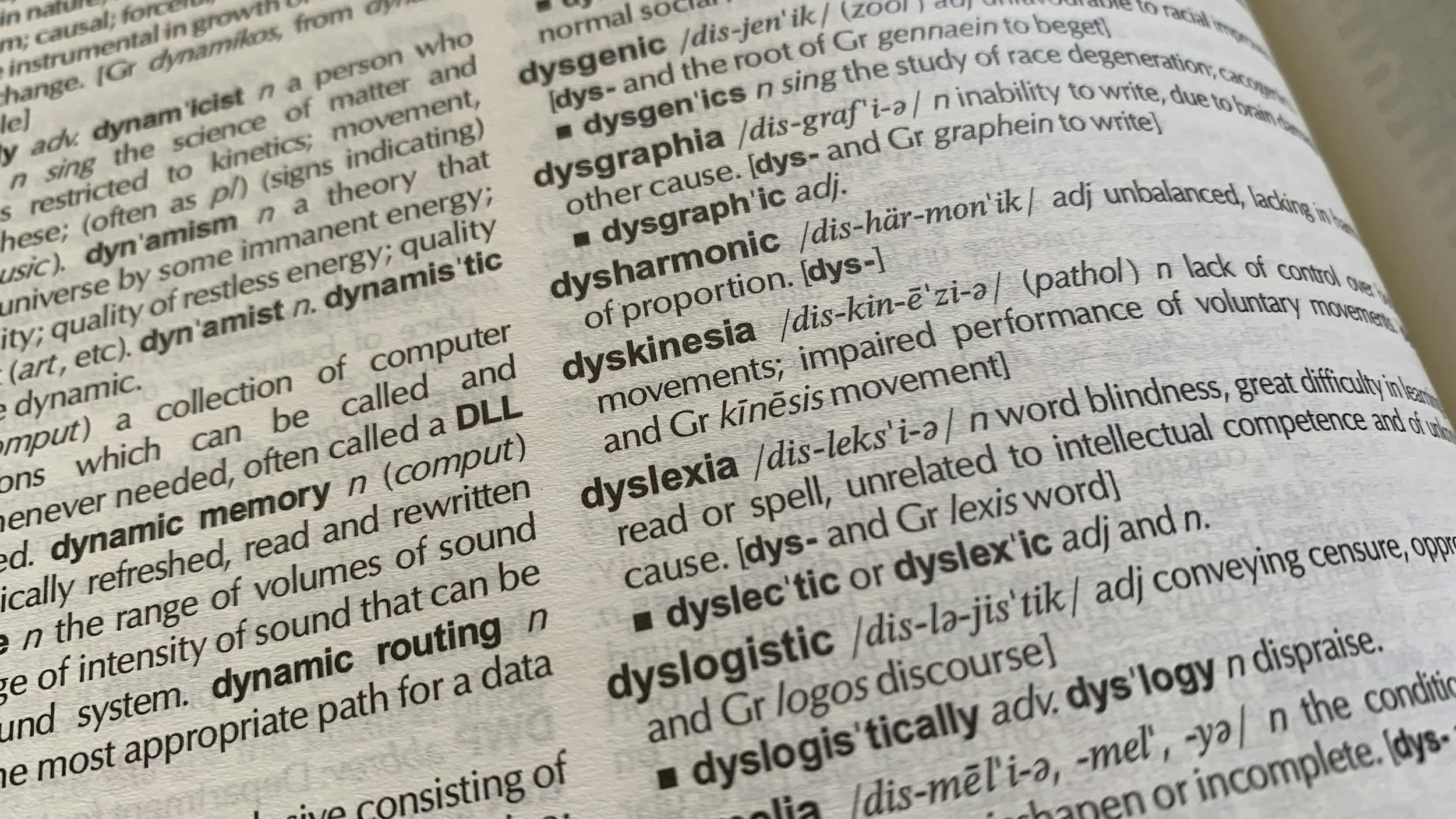
Why Reading More Didn't Fix My Dyslexia:When Bright Students Struggle to Read
If you've ever been told that your child just needs to "read more," I want you to know something:

If you've ever been told that your child just needs to "read more," you're not alone.
Many parents sit across from teachers, tutors, and well-meaning friends hearing some version of the same advice:
Read more.
Practice more.
Try harder.
And while those suggestions often come from a good place, they can leave families feeling frustrated when more reading doesn't seem to solve the problem.
Because sometimes the issue isn't effort.
Sometimes the issue is how a student's brain processes language.
I know because I was that student.
My Dyslexia Story: Diagnosed as a Junior in High School
Today, I've spent nearly thirty years working in education. I've helped students navigate dyslexia, ADHD, executive functioning challenges, and standardized testing. I hold certifications in structured literacy programs and have dedicated my career to helping students understand how they learn best.
But none of that changes the fact that I wasn't diagnosed with dyslexia until I was a junior in high school.
Looking back, the signs were always there.
I worked harder than many of my classmates, but reading often felt exhausting. I would read a page and realize I had no idea what I had just read. Spelling seemed inconsistent no matter how much I studied. I developed coping strategies that allowed me to get by, but underneath those strategies was a constant feeling that learning shouldn't have to be this hard.
The message I often received was simple:
Try harder.
Read more.
Study longer.
Pay closer attention.
The problem was that effort was never the issue.
I wasn't struggling because I was lazy. I wasn't struggling because I wasn't intelligent. I was struggling because my brain processed language differently, and nobody knew it.
Why Reading More Isn't Always the Answer
Everything changed when I finally received my diagnosis.
For the first time, I understood that there was a reason things felt harder for me than they appeared to be for others. More importantly, I learned that there were specific tools and strategies that could help.
The diagnosis didn't lower expectations.
It raised understanding.
That's an important distinction.
One of the biggest misconceptions about dyslexia is that students simply need more practice. While practice is certainly important, asking a student with dyslexia to "just read more" is a little like asking someone to run a marathon without teaching them how to train.
Practice matters.
But practice alone isn't enough when a student hasn't been taught the underlying skills they need to become a successful reader.
What Students With Dyslexia Actually Need
Students with dyslexia often need explicit, systematic instruction that teaches them how sounds, letters, syllables, and words work together.
They need instruction that is:
Structured
Sequential
Intentional
Multi-sensory
Responsive to the way their brains learn
When students receive that type of instruction, remarkable things happen.
I've seen students who believed they weren't smart discover that they are incredibly capable learners.
I've seen students who avoided books become confident readers.
I've watched families move from frustration and worry to hope and understanding.
And every single time, I think about that high school junior who finally learned there was a name for what she had been experiencing all along.
What I Wish Parents Knew About Dyslexia
Today, as a learning specialist and the founder of WayPath, I carry both perspectives with me.
I understand the research, the assessments, and the instructional methods. But I also understand the emotional side of the journey—the self-doubt, the frustration, and the exhaustion that can come from working twice as hard to achieve the same result.
If you're worried about your child, trust your instincts.
If reading seems harder than it should be, it's worth asking why.
If your child is bright but struggling, there may be more to the story.
Most importantly, know this:
A diagnosis is not the end of the story.
For many students, it's the beginning of understanding themselves, discovering their strengths, and finally receiving the support they deserve.
I know because it was the beginning of mine.
How We Help
At WayPath, we work with students of all ages who struggle with reading, dyslexia, executive functioning challenges, and academic confidence.
Using evidence-based structured literacy approaches, including Wilson Reading and Spelling and other research-backed interventions, we help students develop the foundational skills they need to become successful readers and learners.
Our goal is not simply to improve reading scores.
Our goal is to help students understand how they learn, build confidence in their abilities, and discover that struggling in one area does not define their potential.
Because every child deserves the opportunity to experience success—and every family deserves answers.
Why We Believe in Starting Early: Building Study Skills Before School Gets Hard
Nobody really likes to talk about school in July. Really, they don’t. By this point in the summer, most families are finally settling into vacation mode. You're enjoying slower mornings, pool days, and trying not to think too much about that summer reading assignment sitting on the kitchen counter. You know the supply list has been posted, but no one is ready to look at it. Summer reading assignments? That can be an August issue.
Summer should be about sleeping in, taking trips, and pretending the school portal doesn't exist for a few months. Students deserve a break. Parents deserve a break. Teachers definitely deserve a break.
But after decades in education, we've learned something. The families who have the smoothest school years aren't necessarily the ones with the strongest students. They're usually the ones who address things before they become problems.
Because things are often fine—until suddenly they're not.
Maybe it's middle school, when students discover that highlighting every sentence in yellow isn't actually a study strategy.
Maybe it's eighth grade, when Shakespeare shows up and they wonder if they're reading English at all.
Maybe it's sophomore year, when The Scarlet Letter enters the picture and students realize that reading the words and understanding the words are two very different things.
Or maybe it's junior year, when AP classes, extracurricular activities, and SAT prep all collide at once.
That's usually when we hear some version of: "School has never been this hard before." And honestly, students are right.
Recognizing Learning Differences Before They Become Bigger Challenges
Over the years, we've worked with plenty of bright, capable students who simply learned to compensate. They were hardworking and earned decent grades. They managed until eventually the demands outpaced the strategies.
Recently, we began working with a high school senior on SAT preparation, something became clear fairly quickly: when time pressure was removed, the student performed significantly better. As we dug deeper, it became obvious that there had been signs for years. But because this student was bright and had developed ways to compensate, those struggles had never been fully addressed.
By the time he arrived at WayPath and we uncovered the issue, it was too late to pursue accommodations for the SAT. Fortunately, it wasn't too late for college. Those conversations are happening now, and this student will enter the next chapter with a better understanding of how he learns and how to advocate for himself.
That experience reinforced something we believe deeply. Starting early isn't about assuming something is wrong. Rather, it's about creating opportunities.
How One-on-One Tutoring Builds Study Skills and Academic Confidence
One of the biggest misconceptions about one-on-one tutoring is that it's only for struggling students. Nothing could be further from the truth. Some of the students who benefit most from individualized academic support are doing perfectly fine.
Tutoring isn't just about helping with tomorrow's homework assignment. It's about teaching students how to approach difficult material, how to organize themselves, how to communicate with teachers, how to study effectively, and how to advocate for themselves when they need help. Those are life skills, and they don't magically appear when the content gets harder. They have to be taught.
Many middle school and high school students don't struggle because they aren't capable. They struggle because no one has ever explicitly taught them executive functioning skills like planning, organization, note-taking, and time management.
And yes, sometimes that means learning how to annotate a novel, break down a research paper, or tackle Shakespeare one line at a time. Those same skills are what help students succeed in AP classes, college, and eventually the workplace.
(As it turns out, adults need executive functioning skills too. The only difference is that instead of forgetting to turn in homework, we're forgetting why we walked into the pantry.)
Why Early Academic Support Matters
One phrase you'll often hear from us is this: We would much rather start when things are going well. It's easier to build strong study skills than to repair years of frustration. It's easier to address learning gaps than to undo bad habits. It's easier to have conversations about accommodations, learning differences, and executive functioning when there isn't a crisis. Academic support is most effective when students are doing reasonably well and have the time and space to build strong habits. Waiting until grades begin to fall often means addressing stress and frustration in addition to the underlying skills.
Why Summer is the Best Time to Build Study Skills
Summer happens to be one of our favorite times to work with students, and not because we want them spending hours doing worksheets. It’s actually quite the opposite. Summer provides something that'sincreasingly rare during the school year: space to slow down and rebuild foundations. For many middle school and high school students, summer tutoring and academic coaching create opportunities to strengthen reading comprehension, improve executive functioning skills, and develop better study habits before honors and AP classes raise the stakes. Without the pressure of quizzes, sports, practices, and packed schedules, students can focus on learning instead of simply surviving. One-on-one tutoring and executive functioning support give students the chance to build academic confidence, learn effective strategies, and enter the school year with a stronger foundation for long-term success.
How Subject Tutoring Supports SAT and ACT Success
Often, families sometimes think they have to choose between subject tutoring and SAT or ACT prep. In reality, they're connected. Strong reading comprehension, solid writing skills, and better executive functioning skills support standardized testing.
Subject support builds the very foundations students rely on when they sit down to take the SAT or ACT. Even now, we're still seeing the effects of interrupted learning from the pandemic. Learning gaps that were easy to hide in elementary school are becoming harder to ignore as students move into middle school, high school, and eventually college.
Academic Support is About Preparation, Not Panic
That's why we believe so strongly in starting early. Not because something is wrong and not because every child needs intensive intervention. It’s because every student deserves the chance to understand how they learn, develop academic confidence, and build strong habits before the material gets harder.
After decades in education, we can tell you this: Things will get hard. Everyone eventually encounters a difficult class, gets a teacher whose style doesn't match theirs, and has to read a book they don't want to read.Does anyone really want to delve into Heart of Darkness when a Fourth of July barbeque is around the corner or it’s time for summer camp?
The goal isn't to avoid those moments.
The goal is to have a plan when they arrive.
_____________________________________________________________________________
How We Help
At WayPath, we work with students of all ages through one-on-one tutoring, executive functioning coaching, SAT and ACT preparation, and summer intensives designed to strengthen study skills and build academic confidence before the school year begins.
Whether students need support in a specific subject or simply need help developing stronger habits, our goal is the same: helping them understand how they learn and preparing them for whatever comes next.